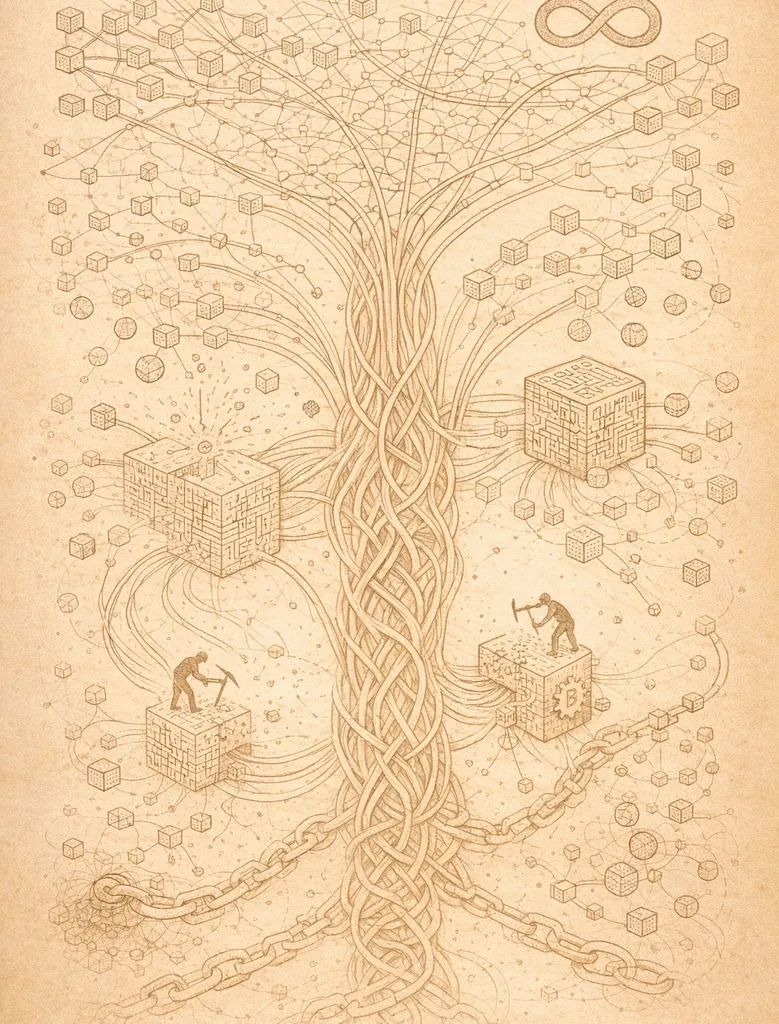
Most newcomers encounter Bitcoin through its price. Headlines shout about rallies and crashes, creating the impression that Bitcoin is primarily a speculative vehicle. But price is a surface phenomenon — a reflection of something deeper. To genuinely understand Bitcoin, you must first understand why its scarcity matters. Scarcity is not a marketing feature or a talking point; it is the foundational economic property that distinguishes Bitcoin from every other monetary asset in human history. This guide walks beginners through the concept of scarcity, explains how Bitcoin enforces it at the protocol level, and explores why grasping this principle is essential before engaging with price at all.
What Scarcity Actually Means in Economics
Scarcity is the condition in which demand for a resource exceeds its freely available supply. In economics, scarcity is not about rarity alone — it is about the relationship between how much of something exists, how difficult it is to produce more, and how many people want it. Gold is scarce not merely because there is a finite amount on Earth, but because extracting additional gold requires enormous energy, labor, and capital. This cost of production creates what economists call a high stock-to-flow ratio: the existing supply (stock) is large relative to the amount newly produced each year (flow).
Understanding scarcity in these terms is essential before approaching Bitcoin. Many digital goods — music files, images, software — can be copied infinitely at near-zero cost. They are abundant by nature. Bitcoin was designed to be fundamentally different. Its creator, Satoshi Nakamoto, embedded a strict supply limit directly into the protocol, making Bitcoin the first purely digital asset that cannot be duplicated, inflated, or counterfeited. This is not a minor technical detail. It is the property that makes Bitcoin worth studying at all.
How Bitcoin Enforces Its 21 Million Limit
Bitcoin's total supply is capped at 21 million coins. This limit is not a policy decision that a board of directors can revise — it is a consensus rule enforced by every node on the network. When Satoshi Nakamoto published the Bitcoin whitepaper in 2008, the issuance schedule was defined with mathematical precision. New bitcoin enters circulation through mining rewards, and these rewards are cut in half approximately every four years in an event called the halving. The initial reward was 50 bitcoin per block; as of 2024, it stands at 3.125. This predictable reduction continues until the final fraction of a bitcoin is mined, estimated around the year 2140.
The difficulty adjustment mechanism reinforces this schedule with remarkable elegance. Every 2,016 blocks — roughly two weeks — the network automatically recalibrates the computational difficulty required to mine a new block. If miners add more hardware and blocks arrive too quickly, difficulty increases. If miners leave and blocks slow down, difficulty decreases. This self-correcting mechanism ensures that no amount of additional computing power can accelerate the issuance schedule. More mining does not produce more bitcoin. It simply makes the network more secure. The supply curve remains untouched, indifferent to market enthusiasm or industrial investment.
Why Absolute Scarcity Is Historically Unprecedented
Throughout history, every scarce resource has been subject to supply expansion when its price rises sufficiently. When gold prices surge, mining companies open new operations, explore deeper deposits, and invest in extraction technology. The supply of gold increases — slowly, but it increases. Silver, platinum, real estate, and every other asset considered a store of value share this characteristic. Higher prices incentivize greater production, which eventually tempers the scarcity that drove prices upward in the first place. Economists call this the supply response.
Bitcoin breaks this pattern entirely. No matter how high its price climbs, the protocol will never produce more than 21 million coins. There is no Bitcoin mine to expand, no deposit to discover, no central authority that can authorize additional issuance. This quality — absolute scarcity — has never existed in any monetary asset before. It means that Bitcoin's supply schedule is perfectly inelastic: it does not respond to demand. For beginners trying to understand why bitcoin scarcity matters, this is the critical insight. You are not simply looking at a rare digital token. You are looking at the first asset in human history with a supply that cannot be influenced by any market participant, government, or institution.
Scarcity Versus Artificial Limitation
A reasonable question arises: could the rules be changed? After all, Bitcoin is open-source software. In theory, anyone can propose a modification to the 21 million cap. In practice, however, changing this rule would require overwhelming consensus among tens of thousands of independent node operators distributed across the globe. Each node enforces the protocol rules independently. A proposal to increase the supply would be rejected by the vast majority of participants because it would directly undermine the property that gives their holdings value. The incentive structure makes such a change effectively impossible — not because it is technically forbidden, but because it is economically irrational for the network's participants to accept it.
This distinction between artificial limitation and protocol-enforced scarcity is vital for beginners. Many digital tokens claim limited supplies, but their rules are governed by small development teams or corporate entities that can alter parameters at will. Bitcoin's decentralization is not an abstract ideal — it is the mechanism that makes its scarcity credible. Without tens of thousands of independent validators, the 21 million cap would be merely a promise. With them, it becomes an economic reality that no single actor can override. The scarcity is not declared; it is enforced continuously, block by block, by the distributed architecture Satoshi described in the original whitepaper.
Value as a Precondition for Price
Price is what you see on an exchange screen. Value is the underlying reason anyone would want to hold an asset at all. For beginners, conflating these two concepts leads to confusion and poor decision-making. Bitcoin's price fluctuates daily — sometimes dramatically. But its value proposition remains constant: it is a digitally native, globally transferable, censorship-resistant asset with a supply that no entity on Earth can expand. Understanding this distinction is why bitcoin scarcity matters for beginners before they ever consider buying.
When you understand value before price, market volatility loses its power to disorient you. A price decline does not change the fact that only 21 million bitcoin will ever exist. A price surge does not make Bitcoin more scarce than it already is. The supply schedule is fixed and publicly verifiable by anyone running a node. This transparency is itself a form of value — it removes the need to trust institutions, auditors, or governments. For those beginning their education, we encourage exploring our Bitcoin education resources and reviewing the primary sources that underpin these ideas.
Building Understanding on First Principles
The most durable understanding of any subject comes from first principles — the foundational truths from which everything else follows. In Bitcoin, scarcity is that foundation. Every conversation about price action, market cycles, institutional adoption, and monetary policy ultimately traces back to the fixed supply. If Bitcoin's supply could be expanded, none of its other properties would matter. It would simply be another inflationary digital ledger. The 21 million cap is not one feature among many; it is the feature upon which all others depend.
For those beginning this journey, the invitation is simple: resist the urge to start with price charts and market predictions. Start instead with the question of why something with no physical form and no government backing could hold value at all. The answer lies in scarcity — real, verifiable, absolute scarcity — enforced not by authority but by mathematics and distributed consensus. Once this principle takes root in your understanding, everything else about Bitcoin becomes clearer.