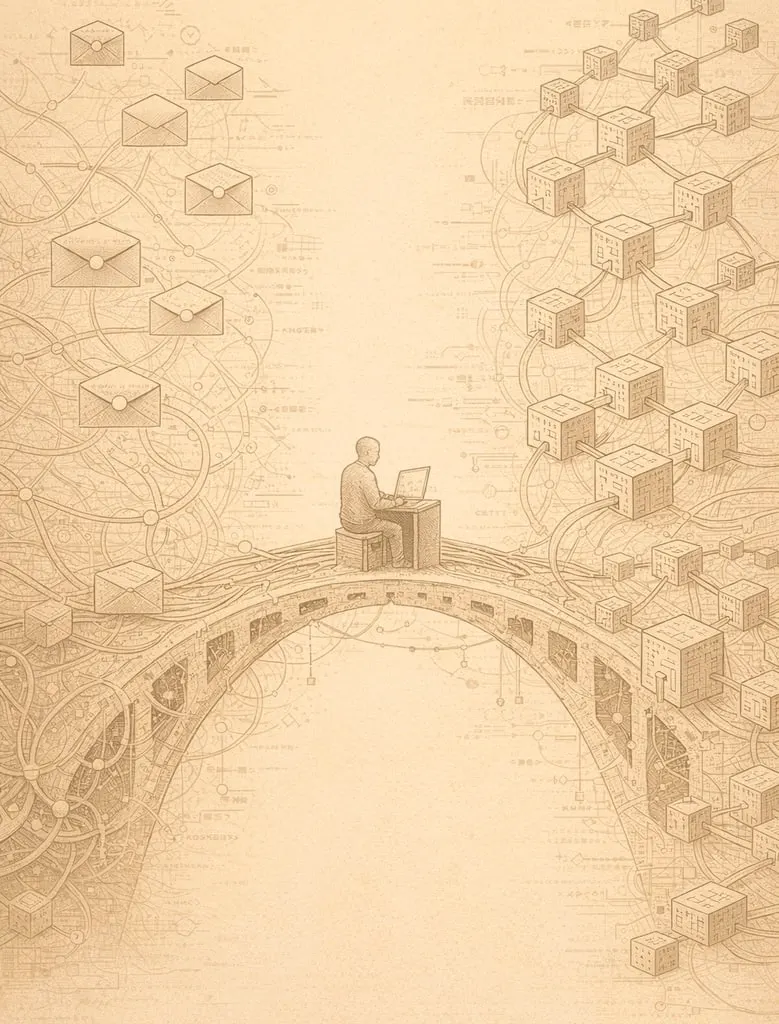
Hal Finney spent decades building cryptographic tools for individual freedom before becoming the first person to receive a Bitcoin transaction. His work bridged the theoretical ambitions of cypherpunk culture with the practical reality of a functioning peer-to-peer monetary network.
The Cypherpunk Movement Before Bitcoin
Before Bitcoin existed as software, it existed as an aspiration. Throughout the 1990s, a loosely organized group of cryptographers, programmers, and privacy advocates known as the cypherpunks exchanged ideas on an electronic mailing list about how cryptographic tools could protect individual liberty from institutional overreach. Their conversations ranged from encrypted email protocols to anonymous remailers, but one recurring thread stood above the rest: the dream of digital cash that no government or corporation could control. This was not idle speculation. Members like David Chaum, Adam Back, Wei Dai, and Nick Szabo each contributed theoretical frameworks and working prototypes that chipped away at the problem of trustless digital value transfer.
Hal Finney was among the most active and technically accomplished participants in this movement. A senior developer at the PGP Corporation, Finney had spent years building Pretty Good Privacy, the encryption software that gave ordinary people access to military-grade cryptography for the first time. His professional work was itself a cypherpunk act: democratizing privacy tools that governments had tried to restrict under export control laws. Finney understood, perhaps more viscerally than most of his peers, that cryptographic systems were not merely academic exercises. They were instruments of sovereignty. This conviction would later make him uniquely prepared to recognize the significance of Satoshi Nakamoto's proposal when it appeared on the Cryptography Mailing List in October 2008.
Reusable Proofs of Work: Finney's Own Attempt
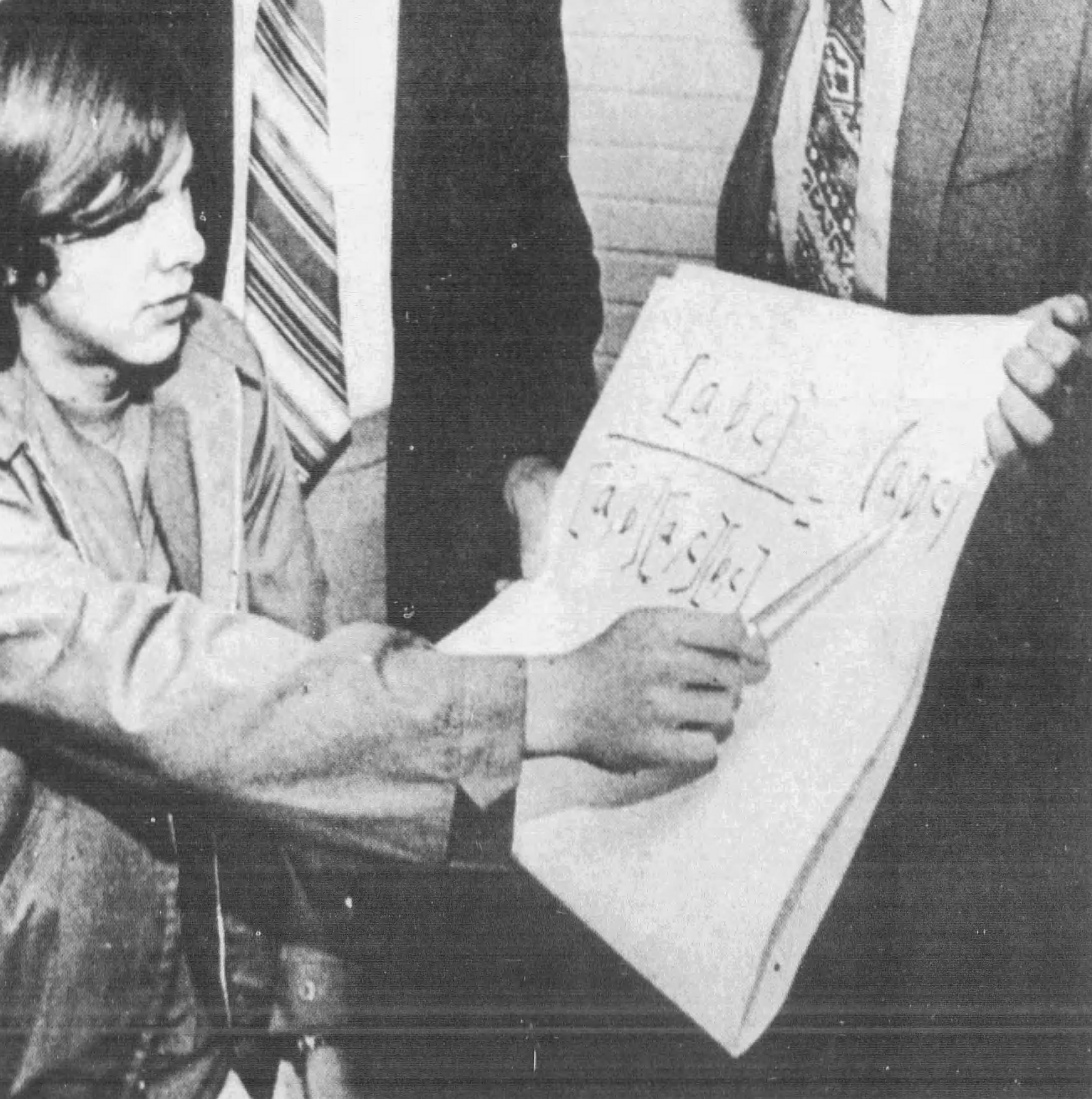
In 2004, four years before the Bitcoin whitepaper, Finney published his own system called Reusable Proofs of Work, or RPOW. The concept built directly on Adam Back's Hashcash, which used computational proof-of-work to combat email spam. Finney's insight was that a proof-of-work token, once generated, could be exchanged and reused as a form of transferable value. RPOW servers would verify that each token had been legitimately created through computation and had not been double-spent, then issue a new token to the recipient. It was an elegant attempt to solve the double-spending problem without relying on a central bank or trusted intermediary.
RPOW did not achieve widespread adoption, but it demonstrated Finney's deep engagement with the specific technical challenges that Bitcoin would later solve more completely. The double-spending problem, the role of proof-of-work as an anchor for digital scarcity, and the need for a verification mechanism that minimized trust were all central to RPOW's architecture. When Satoshi's whitepaper arrived, Finney was not encountering these ideas for the first time. He had already built a working system around them. This prior experience gave him the technical fluency to evaluate Bitcoin's design on its merits rather than dismissing it as yet another failed digital cash scheme, which is precisely what most other cypherpunks did.
The First Transaction and Early Protocol Validation
On January 3, 2009, Satoshi Nakamoto mined the Bitcoin genesis block. Five days later, on January 8 UTC, Satoshi announced Bitcoin version 0.1. Hal Finney downloaded the software almost immediately. On January 12, 2009, Satoshi sent ten bitcoins to Finney in what is widely recognized as the first peer-to-peer Bitcoin transaction. Finney documented his experience publicly, noting bugs, suggesting improvements, and expressing genuine enthusiasm. His famous tweet from that period, "Running bitcoin," became one of the most iconic statements in the network's history. It was not a marketing slogan. It was a status report from someone stress-testing a new protocol.
Finney's role in these early days extended well beyond simply receiving coins. He actively tested the software, reported crashes, and engaged Satoshi in detailed technical correspondence about the protocol's design choices. According to archived emails available through the Nakamoto Institute, Finney raised questions about scalability, transaction throughput, and long-term security assumptions. He was, in effect, Bitcoin's first peer reviewer in a production environment. While Satoshi provided the theoretical architecture and initial codebase, Finney provided something equally essential: rigorous, good-faith validation from someone who understood exactly what the system was trying to achieve and what could go wrong.
Why Finney Believed When Others Did Not
The cypherpunk mailing list had seen numerous digital cash proposals before Bitcoin. Most were met with skepticism, and for good reason. Previous systems like DigiCash, e-gold, and b-money had each failed to solve the full constellation of problems required for trustless digital money: decentralized issuance, censorship resistance, double-spend prevention without a central server, and a credible monetary policy. When Satoshi posted the whitepaper, many list members dismissed it reflexively. Finney did not. His response was measured but optimistic, and he began engaging with the technical details almost immediately.
What separated Finney from the skeptics was not naivety but depth of experience. Having built RPOW, he recognized that Satoshi's combination of proof-of-work, a distributed timestamp server, and a chain of cryptographic signatures addressed the specific failure modes that had undermined earlier attempts. He understood why scarcity enforced through protocol rules mattered in ways that centralized issuance never could. Finney's belief in Bitcoin was not faith. It was informed technical judgment rooted in years of hands-on work with the same class of problems. His willingness to engage gave the nascent project something it desperately needed: credibility within the very community whose approval mattered most.
Legacy in Code, Culture, and Custody
Hal Finney was diagnosed with amyotrophic lateral sclerosis, or ALS, in 2009, the same year Bitcoin launched. Over the following years, as the disease progressively limited his physical capabilities, he continued to contribute to Bitcoin development and discourse when he could. He wrote thoughtfully about the importance of self-custody and the responsibility that comes with holding one's own keys, a principle that remains central to Bitcoin's ethos. Finney passed away on August 28, 2014, and his body was cryopreserved by the Alcor Life Extension Foundation, a decision consistent with his lifelong optimism about technology's potential to expand human possibility.
Finney's contributions to Bitcoin cannot be measured solely in lines of code or early transactions. He embodied the cypherpunk principle that privacy and individual sovereignty are not abstract ideals but engineering problems with concrete solutions. His career arc, from PGP encryption to reusable proofs of work to Bitcoin's first transaction, traces the intellectual lineage of the entire movement. Every person who runs a Bitcoin node, generates a private key, or transacts without permission from an intermediary is, in some meaningful sense, continuing the work Finney dedicated his life to. He was not merely a participant in Bitcoin's origin story. He was the living thread connecting decades of cryptographic ambition to its most successful realization.
Understanding Finney's Place in Bitcoin's Origin
Debates about Satoshi Nakamoto's identity have occasionally drawn Finney into speculation, partly because of his proximity to the project's launch and partly because of his extraordinary technical qualifications. Finney consistently denied being Satoshi, and the available evidence, including distinct writing styles, separate geographic locations during key development periods, and Finney's own transparent public engagement, supports his account. What matters far more than identity speculation is the structural role Finney played. Satoshi designed a system. Finney validated it, tested it, and gave it the first external endorsement from someone whose judgment the cypherpunk community respected.
For anyone studying Bitcoin's history, Hal Finney represents something essential about how open-source protocols gain legitimacy. Bitcoin did not emerge from a corporate laboratory or a government research program. It emerged from a culture of independent cryptographers who had been iterating on the problem of digital money for decades. Finney was the bridge between that culture's theoretical aspirations and Bitcoin's practical reality. His story is a reminder that transformative technologies require not only inventors but also informed early adopters, people with the knowledge to recognize significance and the courage to act on that recognition before consensus forms.